
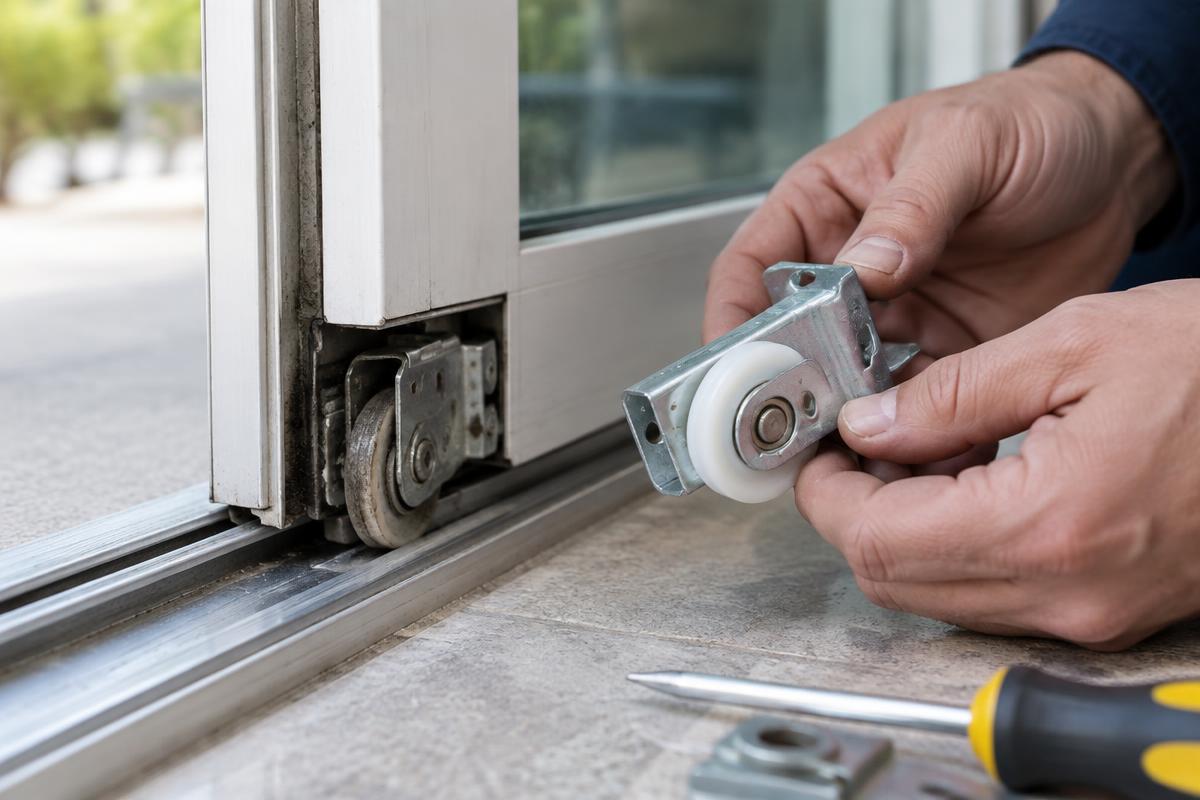
Rollers are small, hidden, and easy to forget — until they fail. Because they wear gradually, many people get used to a heavier door without realizing the rollers are the cause. Here are the signs to watch for.
The door feels heavier than it used to
A gradual increase in effort, especially along the full length of travel, is one of the clearest signs of roller wear.
Grinding, scraping, or squealing
Healthy rollers are quiet. Grinding often means bearings are worn, while scraping can mean the wheel has broken and the housing is touching the track.
The panel sits low or uneven
If the bottom of the door looks closer to the track on one side, or the latch no longer lines up, a roller may have collapsed.
Adjustment screws no longer help
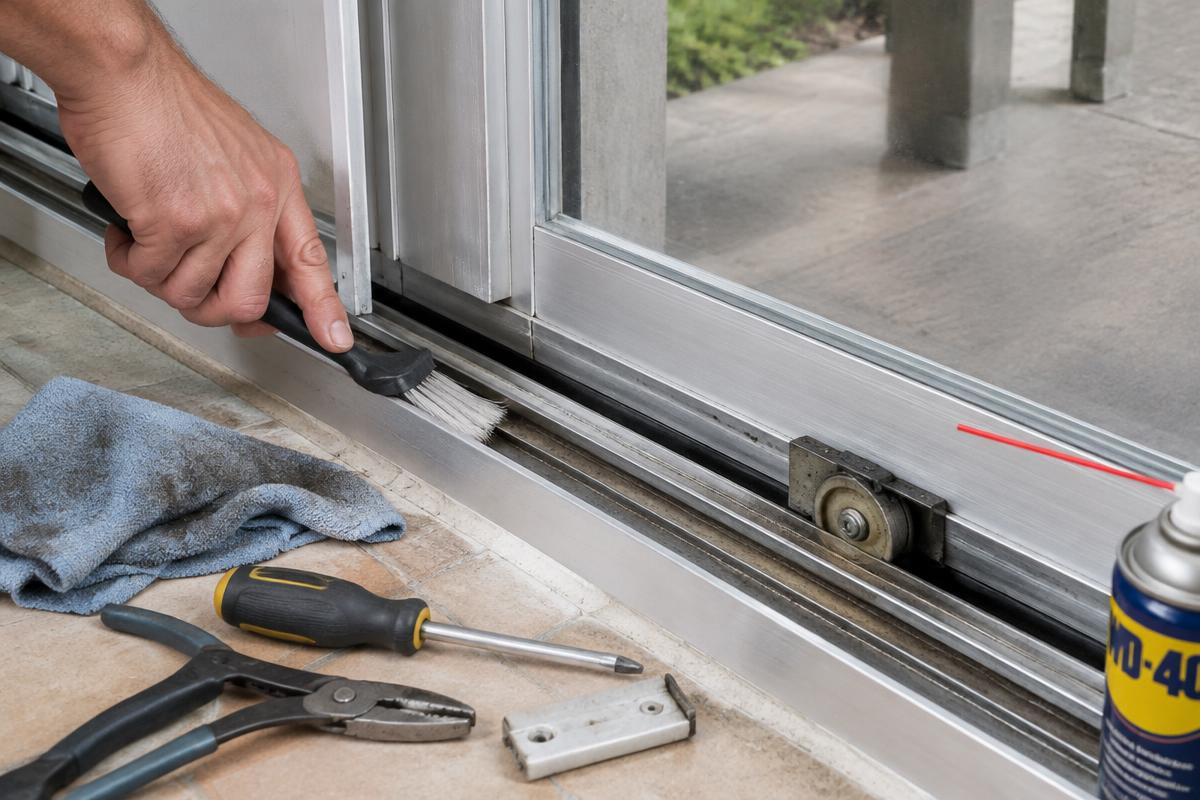
Most doors have adjustment screws that raise the rollers. If turning them makes no difference, the roller assembly itself may be broken.
Pieces in the track
Fragments of plastic or metal in the track are a strong signal that a wheel has broken apart.
Why the right replacement matters
Rollers differ in wheel material, size, housing shape, and weight rating. A mismatched roller can sit at the wrong height or damage the track, so matching the door's design is important.
Related services and guides
Frequently asked questions
Do both rollers need to be replaced?
Usually yes. Rollers wear together, and replacing both keeps the panel level.
Can worn rollers damage the track?
Yes. A broken wheel or exposed housing can scratch and gouge the track over time.
Need help with your sliding door?
Request a quote and describe what's happening.