

Published
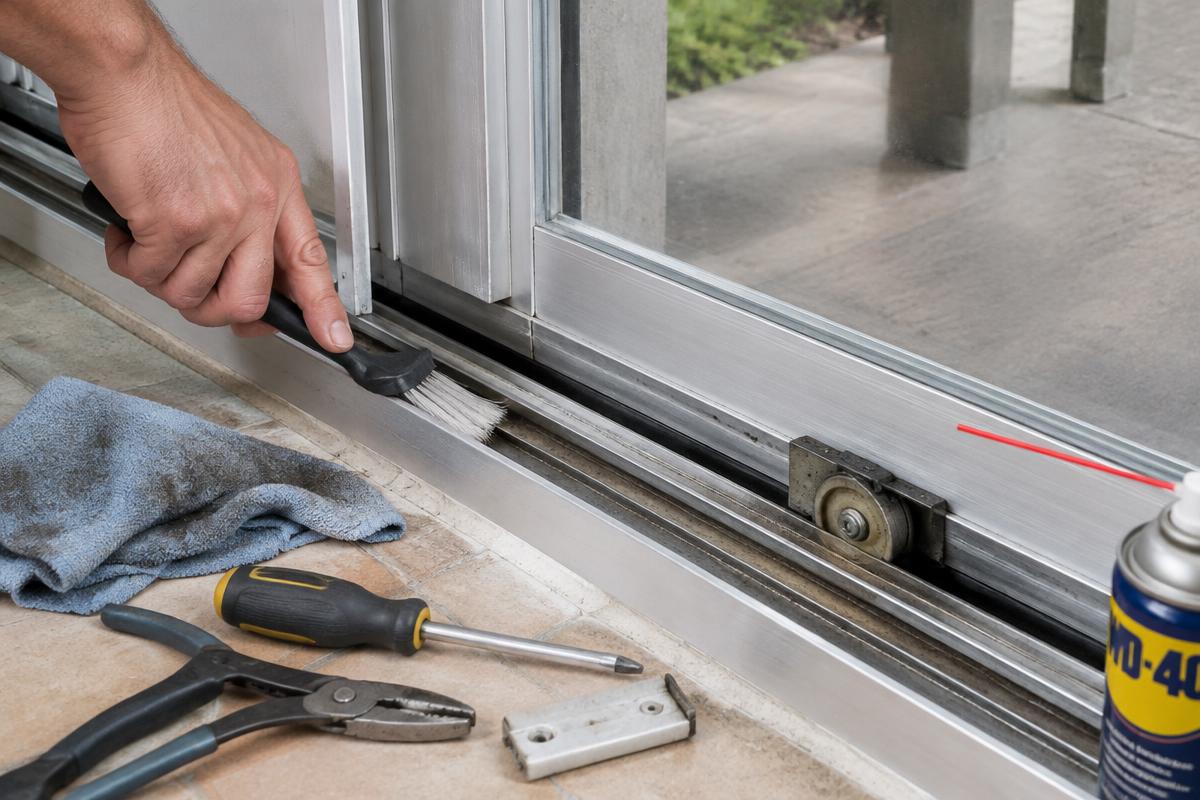
Door track restoration is the process of bringing a worn sliding door track back to a smooth, even running surface so the rollers can glide instead of grind. The bottom rail of a sliding glass door carries the full weight of a heavy glass panel on a few small wheels. Over time that narrow metal rail can develop grooves, flat spots, ridges, and corrosion. Once the surface is no longer smooth, the door starts to grind, jump, or slide hard, and every opening puts more strain on the rollers, handle, and frame. Restoration focuses on repairing that running surface rather than tearing out the whole frame, and it is often paired with roller work so both parts of the system move together again.
Signs your sliding door track is worn
A worn track usually announces itself gradually. You may first notice that the door needs a firmer push than it used to, or that it makes a scraping or rumbling sound partway through its travel. Look closely at the raised rail the rollers ride on. A healthy rail has a rounded, even top. A worn rail often shows a flattened or sharp edge, a groove worn into the top, or rough spots you can feel with a fingertip.
Other signs are more obvious. A door that hops, catches, or briefly lifts at the same spot every time is usually rolling over a dent or ridge. A panel that drifts off the rail or leans away from the frame may be riding on a rail that has worn unevenly. If the door slides easily in one section and drags in another, the track surface is likely the reason.
- Grooves or flattened spots worn into the top of the rail
- Raised ridges, burrs, or dents you can feel by hand
- Pitting or white, powdery corrosion on aluminum
- The door hopping, catching, or coming off the track
- Uneven sliding — smooth in one section, rough in another
What wears a sliding door track out
Most track wear comes from a few everyday sources working together. Sand and fine grit are the biggest. They blow in from patios, pool decks, and beaches, settle into the channel, and act like sandpaper every time the rollers pass over them. In coastal areas this is a constant battle.
Rollers themselves can damage a track. When a roller's bearing fails or its wheel develops a flat spot, it stops turning freely and starts dragging across the rail. A seized or cracked roller can grind a groove into soft aluminum surprisingly quickly. Moisture adds to the problem: water that sits in the channel, along with salt air and cleaning chemicals, can cause pitting and corrosion. Finally, packed debris such as leaves, pet hair, and dirt can lift the door off its normal path and concentrate weight on small areas of the rail.
How track restoration works, step by step
Every door is different, but a professional track restoration generally follows a consistent sequence. The goal is to create a sound running surface and confirm that the rollers riding on it are in good condition.
- Remove the door panel: the heavy glass panel is lifted out of the frame safely so the full length of the track is accessible.
- Deep clean the track: debris, grit, and old residue are cleared from the channel and the rail so the true condition is visible.
- Inspect the rail: the technician checks for grooves, dents, corrosion, loose sections, and how far the damage runs.
- Re-straighten where possible: minor bends and dents in the rail can sometimes be carefully straightened back into line.
- Install a stainless steel track cap: a stainless steel cover is fitted over the worn rail to create a new, smooth surface for the rollers.
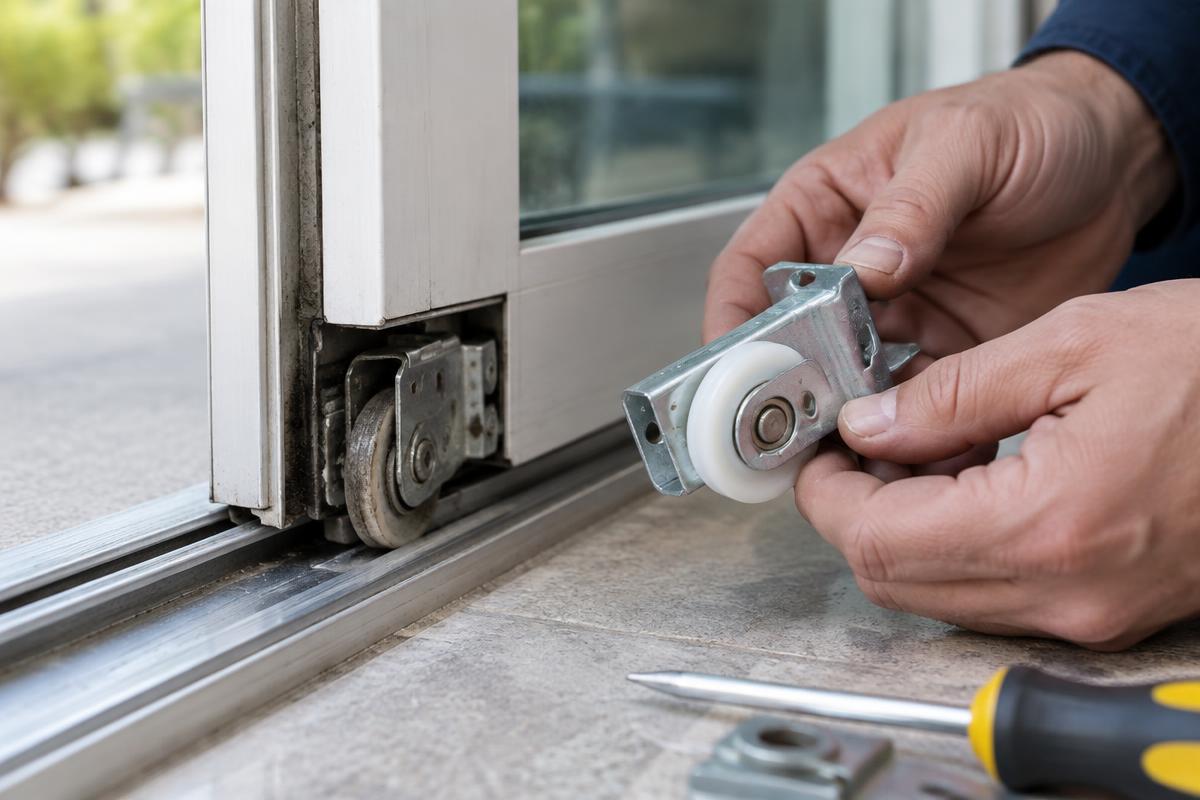
- Inspect the rollers: rollers are checked and replaced if worn, then the door is reinstalled, adjusted, and tested.
Restoration vs full track replacement
Restoration makes sense when the frame is solid and the damage is limited to the running surface of the rail. A track cap can cover grooves and pitting and give the rollers a fresh path without removing the frame from the wall, which keeps the repair less invasive.
Full replacement may be more appropriate when the frame itself is cracked, badly bent, heavily corroded through, or no longer square in the opening. A technician weighs the condition of the frame, how widespread the damage is, the door's design, and whether compatible parts are available. An honest inspection should explain which option fits your door and why.
Why rollers and tracks must be fixed together
Rollers and tracks wear as a pair. Worn rollers damage tracks, and damaged tracks wear out rollers. Installing new rollers on a grooved rail means the new wheels immediately start riding over the same rough spots, and restoring a track while leaving seized rollers in place means the old rollers can begin wearing the new surface.
Addressing both at the same visit gives the door its best chance of sliding smoothly for the long term. It also allows the technician to set the roller height correctly for the restored rail so the panel sits level and latches properly.
Simple care that slows track wear
A few minutes of regular care can slow future wear considerably. Vacuum the track with a crevice tool every week or two, more often during windy or sandy seasons. Wipe the rail with a damp cloth and let it dry fully. Keep the channel dry and clear any weep holes so water can drain.
Avoid oily sprays on the bottom track because they trap grit. Pay attention to how the door feels: if it starts to drag, rumble, or catch, have the rollers checked before the wear spreads to the rail.
- Vacuum and wipe the track regularly
- Keep the channel dry and drain holes clear
- Skip oily lubricants on the bottom rail
- Have rollers checked at the first sign of dragging
Related services and guides
Frequently asked questions
Can a worn sliding door track be repaired instead of replaced?
Often, yes. When the frame is sound and the damage is limited to the rail's surface, a track can usually be cleaned, straightened where possible, and covered with a stainless steel cap. Replacement is considered when the frame itself is cracked, badly bent, or corroded through.
Do I need new rollers when my track is restored?
Not always, but the rollers should be inspected at the same time. Worn or flat-spotted rollers can damage a newly restored surface, so they are typically replaced if they no longer turn smoothly.
What affects the cost of track restoration?
Cost depends on factors such as the length and condition of the track, the door's size and weight, whether rollers also need replacing, how difficult the panel is to remove, and parts availability. An inspection is the best way to get an accurate quote.
Can I restore a sliding door track myself?
Homeowners can safely clean the track and look for damage. Removing a heavy glass panel and fitting a track cap is best left to a professional because the panel can be difficult to handle and the parts must match the door.
Need help with your sliding door?
Request a quote through our contact form and describe what's happening with your track.