

Published
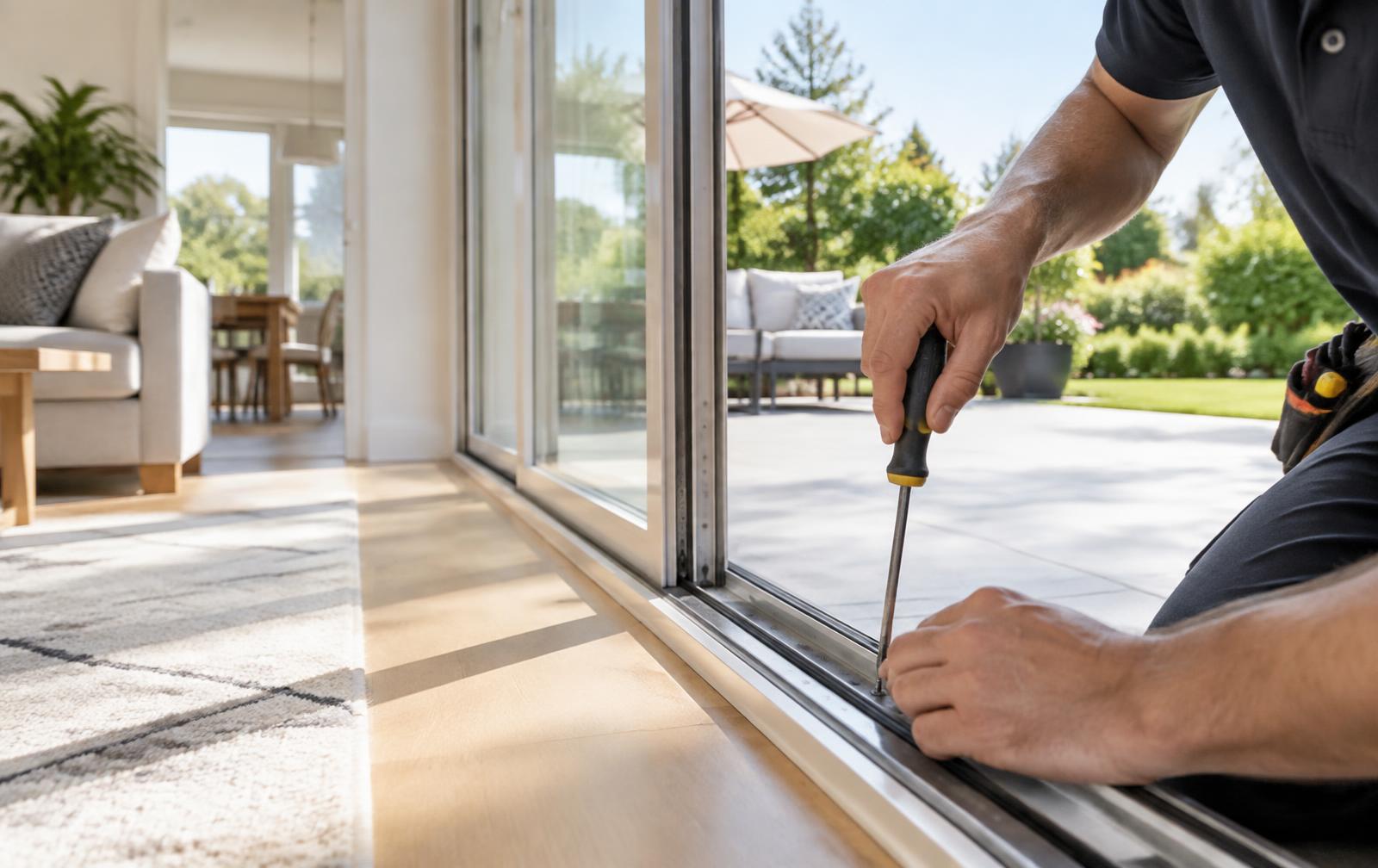
A sliding glass door that once moved with a light push can gradually become heavy, rough, or noisy. The extra effort is more than an annoyance: it can place strain on the handle, frame, rollers, and track. Understanding the likely causes helps you choose a safe first step and know when a professional repair is the better option.
Start with safe homeowner checks
Begin with the simplest and least invasive checks. Open the door only as far as it moves comfortably, then look along the bottom track for sand, pet hair, leaves, and packed dirt. Vacuum loose debris with a crevice tool and wipe the track with a damp cloth. Let it dry before trying the door again.
With the door stationary, check for visible dents, bent track edges, loose screws, cracked handles, and weatherstripping that has come loose. Look at the closed panel from inside to see whether it appears level and whether the latch meets its keeper without lifting the door.
Never force a door that stops, jumps, or grinds, and do not lift the heavy glass panel yourself. Oily sprays collect grit on the bottom track, so cleaning is safer than reaching for lubricant.
- Vacuum and wipe the accessible track
- Check for visible track or hardware damage
- Look for loose or bunched weatherstripping
- Notice uneven gaps without forcing the panel
Why sliding glass doors become hard to slide
Several parts must work together for a heavy glass panel to glide. Rollers carry its weight, the track guides the wheels, and the panel must sit squarely in the opening. A problem in one area often creates symptoms in another.
Worn or flattened rollers are a frequent cause. Bearings can seize, wheels can develop flat spots, and housings can corrode. Instead of rolling, the panel may drag or vibrate. Dirt and small stones in the track create similar resistance, while dents or a worn track surface can stop the door at the same point each time.
A misaligned door can rub along the jamb or bottom rail and may no longer latch cleanly. Worn weatherstripping sometimes adds friction when it tears or folds into the panel's path. In other cases, normal building movement or settling around the opening changes how square the frame is. Foundation movement is only one possibility, so the door and frame should be assessed before assuming a larger structural issue.
- Worn, flattened, cracked, or seized rollers
- Dirty, dented, corroded, or damaged tracks
- A panel that is out of alignment
- Loose or deteriorated weatherstripping
- Frame movement associated with settling
Why rollers are the most common cause
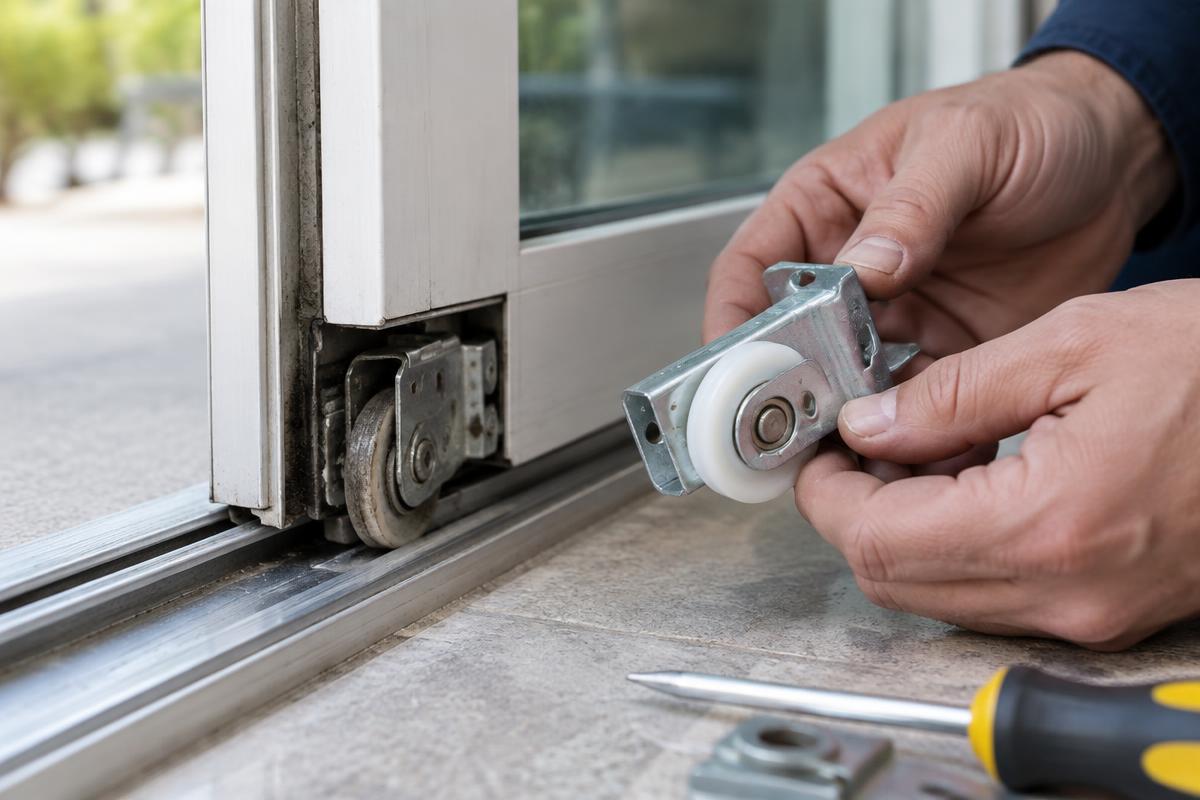
Rollers do their work out of sight while supporting the full weight of the moving glass. Every opening and closing adds wear, and debris from the track can work its way into the wheel assemblies. As the wheels lose their smooth shape or the bearings stop turning freely, effort increases across most of the door's travel.
A low corner, grinding sound, bumpy motion, or a latch that gradually stops lining up can accompany roller wear. Cleaning the track may remove loose dirt, but it cannot restore a broken wheel or bearing. Continued use can also let a damaged roller gouge the track, turning one repair into two.
Replacement rollers must suit the panel's design and weight, and correct height adjustment keeps the reinstalled panel from rubbing the frame.
What a professional repair involves
A professional repair starts by checking how the panel moves, where resistance occurs, and whether the lock and frame reveal an alignment problem. The goal is to identify the complete cause rather than replacing a part simply because the door feels heavy.
For roller replacement, the glass panel is removed carefully so the old assemblies can be reached and matched. The track is then cleaned and inspected. Dents may be repaired where practical, and a worn running surface may be suitable for a fitted track cap, depending on the door's condition.
After the panel is reinstalled, the rollers are adjusted so it sits level and travels smoothly. Realignment can also restore an even closing gap. Finally, the lock, latch, keeper, and handle are checked and adjusted so the door closes and secures correctly.
- Matched roller replacement and height adjustment
- Track cleaning, repair, or capping when suitable
- Panel realignment within the opening
- Lock, latch, keeper, and handle adjustment
What sliding door repair cost depends on
Repair cost depends on the actual findings rather than the symptom alone. A track cleaning and adjustment involve different work from replacing rollers, restoring a damaged track, and correcting several related hardware issues.
Door size and weight, roller design, parts availability, track condition, accessibility, and related lock or alignment work affect the scope. An inspection identifies these factors before the repair is quoted.
- Door size, weight, and hardware design
- Condition of rollers, track, and frame
- Parts needed and their availability
- Access and any related adjustments
Warning signs to call sooner
Stop using the door and arrange help promptly if it jumps the track, sits precariously, or cannot be moved without severe grinding. A panel that is not properly supported can be hazardous, and forcing it may damage the frame or glass.
Cracked glass also calls for prompt professional attention. Keep people and pets away from the damaged area and avoid operating the panel. Water intrusion around the threshold is another reason not to wait, especially when it recurs or reaches interior finishes.
For a hard-to-slide door in Southwest Florida, including the Collier and Lee area, Eagle Sliding Door Repair can assess the rollers, track, alignment, and hardware. You can request a quote through the contact page or call (239) 351-1388 to describe the problem.
- The door jumps or comes off its track
- Glass is cracked or the panel feels unstable
- Water is entering around the door
Related services and guides
Frequently asked questions
Why is my sliding glass door so hard to open?
Worn rollers, a dirty or damaged track, and panel misalignment are common causes. Loose weatherstripping and movement of the frame can also create resistance, so the whole door should be checked.
Can I fix a hard-to-slide door myself?
You can vacuum and wipe the track and look for visible damage. Avoid forcing the panel or lifting the glass yourself. Persistent grinding, roller damage, and alignment problems need professional repair.
How long do sliding door rollers last?
There is no single lifespan. Door weight, frequency of use, track cleanliness, corrosion, and roller quality all affect wear. Grinding, flat spots, and a heavy or low-sitting panel are signs to have them checked.
What does sliding door repair cost depend on?
It depends on the door and hardware design, parts required, track and roller condition, accessibility, and whether alignment or lock work is also needed. A quote should follow an assessment of those factors.
When should I call a professional?
Call when cleaning does not help, the door grinds or sits unevenly, or the latch no longer lines up. Call sooner and stop using the door if it jumps the track, the glass cracks, or water is getting inside.
Need help with your sliding door?
Request a quote and describe what's happening.