

Published
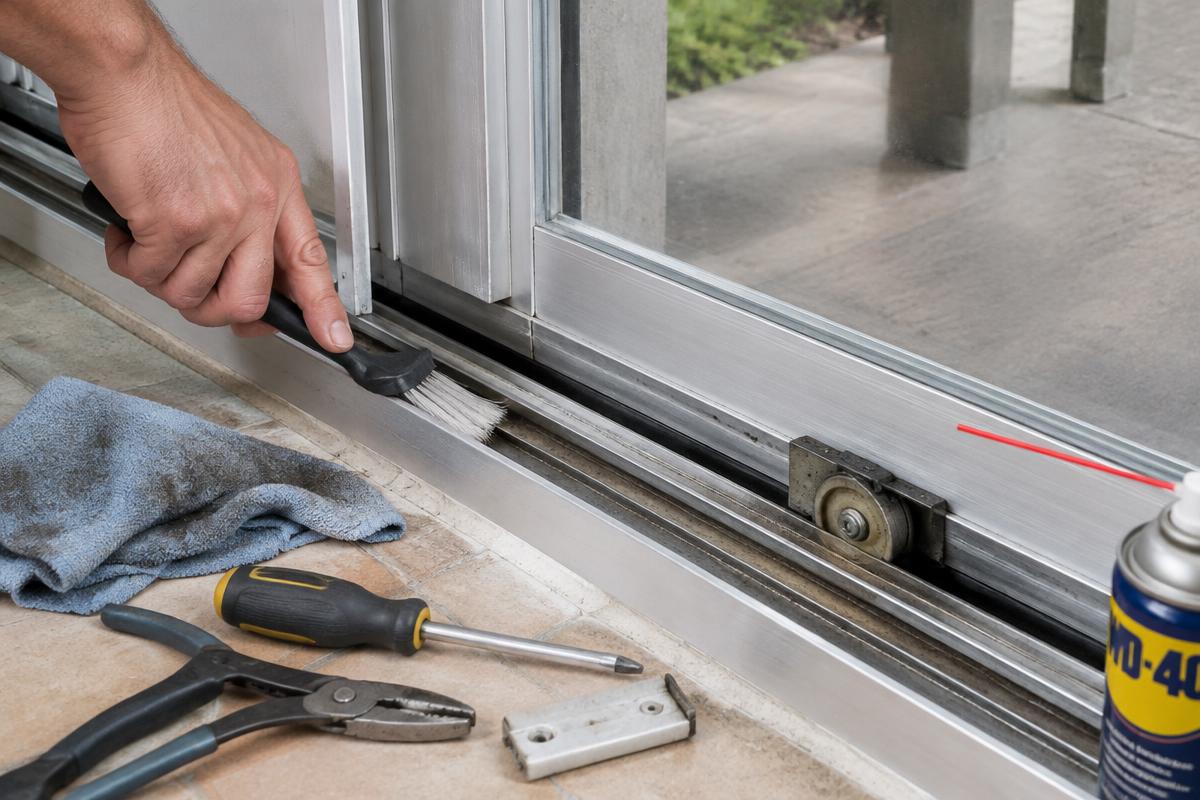
An aluminum sliding door track gives the rollers a narrow, continuous surface to follow. When that rail becomes dirty, dented, grooved, or corroded, the door can scrape, catch, or feel unusually heavy. Aluminum door track repair may involve cleaning, correcting limited damage, or fitting a compatible track part, but severely damaged metal can require replacement.
What causes aluminum door track damage
Everyday debris is a common starting point. Sand, dust, hair, and small fragments collect in the channel and are pressed into the running surface by passing rollers. The resulting abrasion can leave rough patches or grooves, while compacted residue lifts the wheels away from their intended path. A roller with a flat spot or poor rotation adds to the problem by dragging instead of rolling cleanly.
Physical impacts can dent an exposed rail, especially near the center of the opening where people cross the threshold. Aluminum does not rust like steel, but its surface can oxidize and pit, particularly where moisture and debris remain. Blocked drainage, loose fixings, and movement in the supporting frame can also change the rail's position.
Signs the aluminum track needs attention
A door that catches at the same point on every pass may be encountering a dent, raised edge, or hardened deposit. Grinding or scraping sounds, a rough vibration through the panel, and visible grooves along the rail also warrant investigation. Some doors feel fine near the ends but resist through the middle, where foot traffic and repeated use can affect the track most.
Movement symptoms need careful interpretation because worn rollers, panel height, loose guides, and frame alignment can create similar resistance. A panel that jumps, rocks, or leaves its normal path should not be forced.
Safe checks before arranging a repair
With the panel remaining in place, vacuum the accessible channel using a crevice attachment. A soft brush can loosen compacted material, followed by a lightly damp cloth and a dry wipe. Clear surface debris away from drainage openings rather than pushing it into them. Once clean, inspect the rail under good light for isolated dents, grooves, pitting, cracks, and areas that appear raised or loose.
If the panel is stable, move it gently and note whether the same rough spot remains. Do not stand on the track, strike it with a hammer, or lift a heavy glass panel to improve access. Avoid coating the rail with thick oil or grease, which can hold new grit against the rollers. Cleaning is useful for diagnosis, but it cannot restore metal that has been deformed or worn away.
What professional aluminum door track repair involves
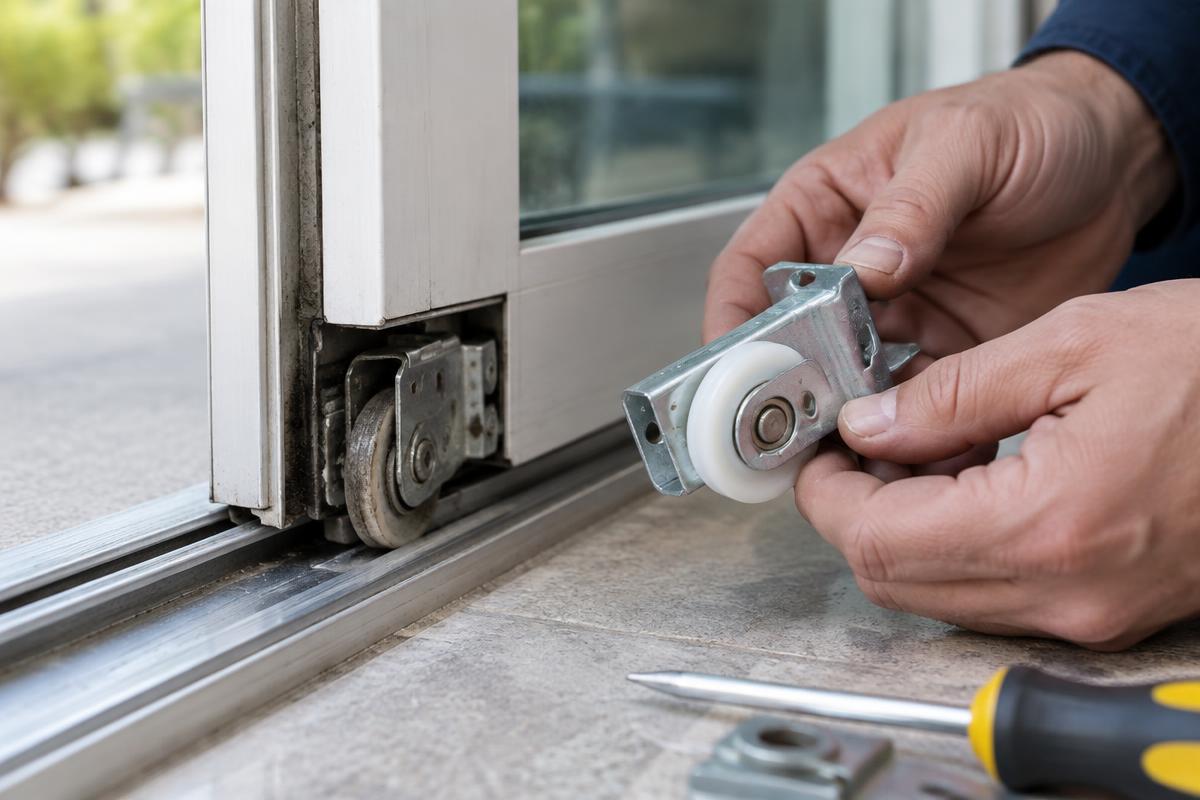
A professional assessment begins with the complete door system. The technician should observe travel, inspect the exposed rail and drainage, and check the rollers, guides, panel position, and supporting frame. Where full access requires panel removal, suitable handling equipment and support are important. Cleaning before the final assessment helps separate removable residue from actual damage to the aluminum.
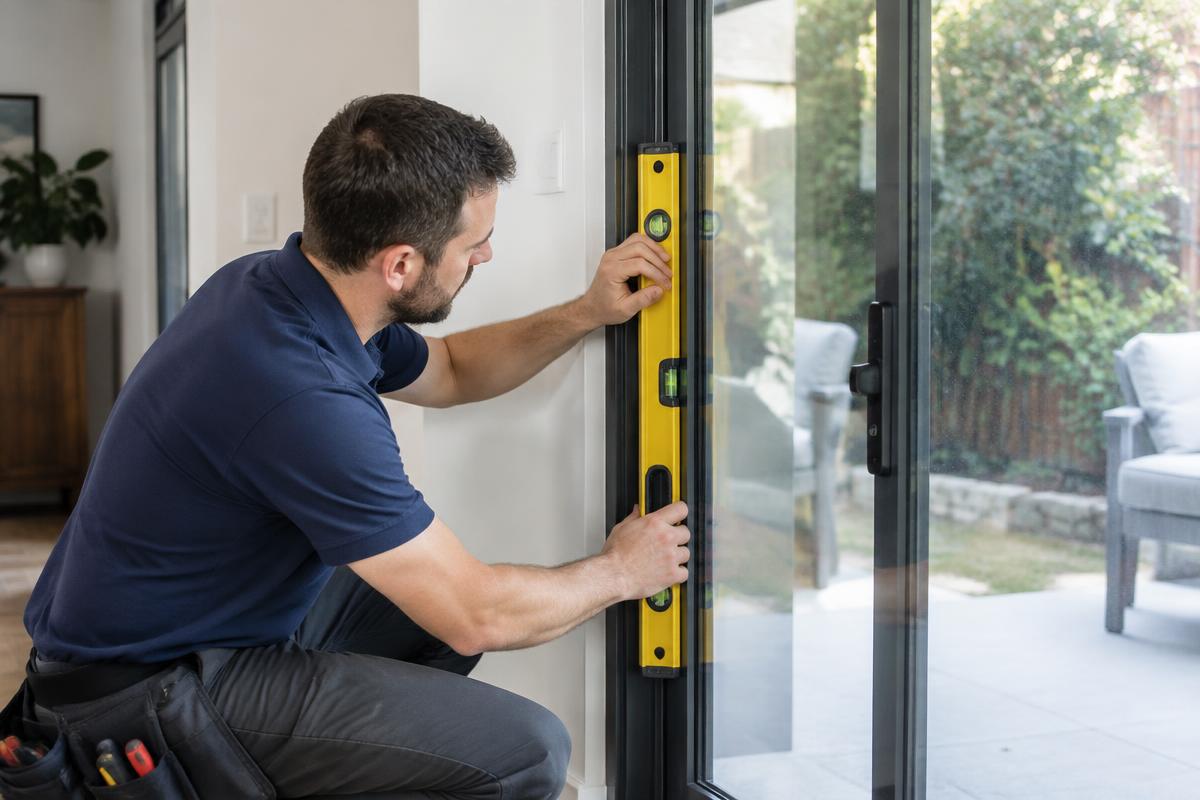
The repair method depends on the rail's condition and construction. Limited damage on an otherwise sound track may be corrected, and some designs accept a compatible replacement section or cap. Rollers must be checked at the same time because a wheel that drags can damage the repaired surface. Reinstallation, alignment, and testing through the full opening and closing cycle confirm that the parts work together.
- Inspect movement, rail condition, rollers, guides, and drainage.
- Remove and support the panel safely when access requires it.
- Clean the channel and identify damage beneath the residue.
- Correct suitable localized damage or fit a compatible track part.
- Reinstall and align the panel with serviceable rollers.
- Test full travel, guidance, clearance, and latch operation.
When repair is suitable and when replacement makes sense
Repair is most plausible when the track remains firmly supported and damage is limited in extent. A small area of wear or deformation does not automatically mean the complete assembly is unserviceable. The rail profile, door construction, and availability of compatible repair components all matter. The objective is a stable, smooth surface rather than a cosmetic improvement that leaves the running path uneven.
Replacement becomes more likely when the aluminum is cracked, extensively pitted, badly distorted, or worn along much of its length. A track that cannot remain securely attached to a sound support may also be unsuitable for localized repair. This does not necessarily mean replacing the entire door; the affected track or threshold component should be identified first. Work scope depends on access, damage extent, part compatibility, roller condition, and any underlying frame issue.
How to prevent future aluminum track damage
Regular light cleaning limits the grit that contributes to abrasion. Vacuum and wipe the channel before debris becomes tightly packed, keep drainage openings clear, and dry the accessible rail after cleaning. Avoid dragging heavy objects across the threshold and use care with furniture, tools, and footwear near an exposed rail. Keeping the running surface clean and dry is generally more useful than applying greasy products.
Changes in movement are worth addressing early. A roller that begins to drag can create a groove that turns a straightforward hardware issue into a track repair as well. Do not force a door that suddenly becomes noisy or unstable. If careful cleaning does not restore normal travel, or inspection reveals damaged aluminum, request a quote through the site's quote form for an assessment of the track and rollers.
Related services and guides
Frequently asked questions
What causes aluminum door track damage?
Common causes include abrasive sand and debris, impacts that dent the rail, moisture and oxidation, blocked drainage, and worn rollers dragging across the surface. Loose fixings or movement in the supporting frame can also affect the track. An inspection should identify contributing issues rather than treating only the visible groove or dent.
Can an aluminum door track be repaired, or does it need replacement?
Limited damage on a sound, securely supported rail may be suitable for repair or a compatible track section or cap. Extensive cracks, corrosion, deformation, or wear can make replacement more appropriate. The door design, supporting frame, roller condition, and availability of compatible parts all influence that decision.
What are signs the aluminum track is the problem?
Catching at one repeatable point, grinding, visible grooves or dents, and rough movement that remains after cleaning can indicate track damage. However, rollers, guides, alignment, and frame movement can cause similar symptoms. A door that jumps or leaves its path should be stopped and assessed rather than forced.
How long does aluminum door track repair take?
The time depends on safe access, whether the panel must be removed, how far the damage extends, and whether compatible track parts are needed. Roller or alignment issues discovered during inspection can also affect the work involved. A realistic estimate requires examining the complete door rather than judging from one symptom.
How can I prevent aluminum door track damage?
Vacuum and wipe the channel regularly, clear drainage openings, and avoid greasy products that trap grit. Protect the exposed rail from impacts, operate the panel without forcing it, and have noisy or poorly turning rollers checked early. Prompt attention to changed movement can help prevent secondary wear to the aluminum.
Need help with your sliding door?
Request a quote through our contact form and describe what's happening with your track.