

Published
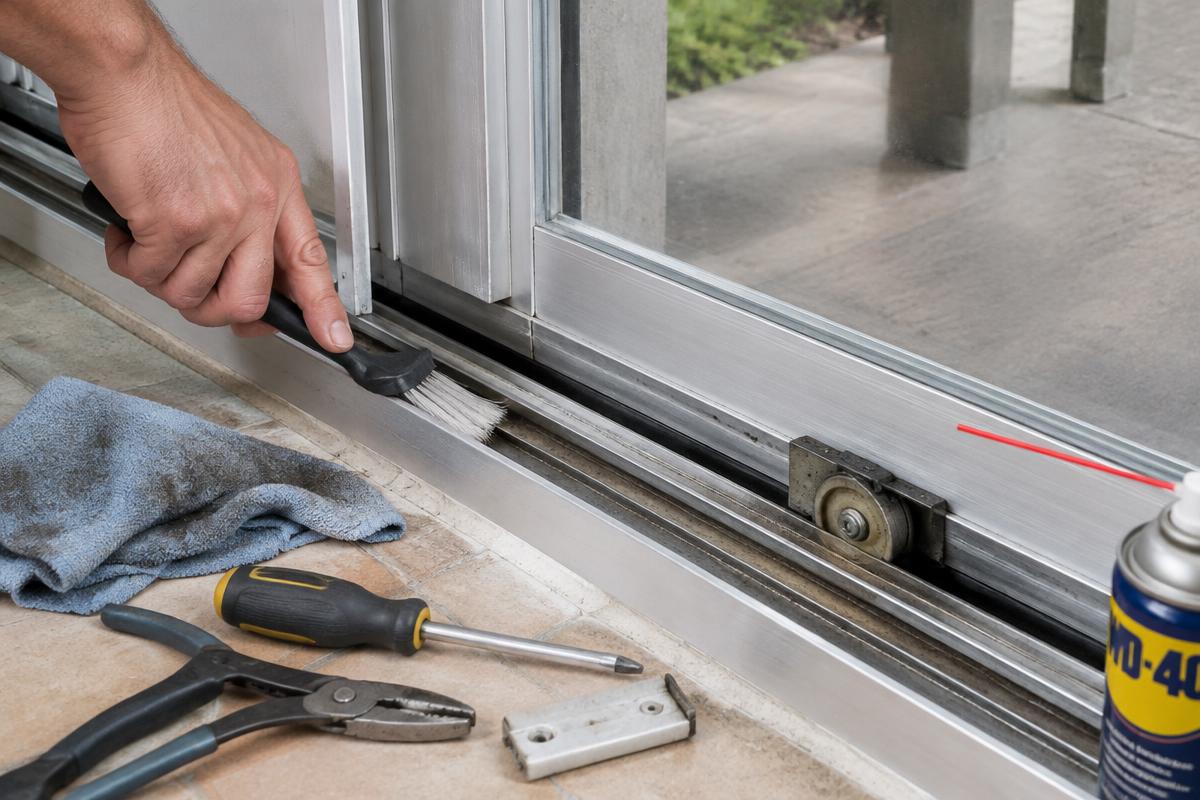
A sliding glass door depends on a clean, smooth track to carry its rollers and guide the panel. Sand, hair, and compacted debris can make that surface rough, while dents, corrosion, and worn rollers can turn minor resistance into grinding or sticking. Glass door track repair addresses the rail and the parts that interact with it rather than assuming the whole door needs replacing. This guide explains the signs to watch for, safe cleaning checks, and when a professional inspection is the sensible next step.
Signs a glass door track needs attention
A change in sound or movement is often the first clue. Grinding, scraping, or a rumbling sensation can mean the rollers are passing over packed grit or a damaged section of rail. Resistance that appears at the same point each time is especially useful to note because it may identify a localized dent, raised edge, or patch of corrosion. A door that feels heavy throughout its travel may instead have several rough areas, contaminated rollers, or an alignment problem.
Look at the channel without dismantling the door. Visible sand, hair, leaves, dark residue, grooves, or bent metal all deserve attention. A panel that shudders, jumps, or comes off its normal path is a more urgent warning; stop forcing it because repeated pressure can worsen the track and roller damage. A latch that suddenly meets its keeper at the wrong height can also indicate that the panel is no longer sitting or traveling as intended.

Cleaning and inspection steps a homeowner can safely do
Start with the panel supported in its normal closed or partly open position. Use a vacuum crevice tool to remove loose material from the accessible channel, then loosen remaining debris with a soft brush. Wipe the rail with a lightly damp cloth and dry it afterward. Avoid pouring water into the assembly, and keep drainage openings clear rather than pushing dirt into them. A plastic pick can dislodge stubborn surface debris, but metal tools can scratch or gouge the running surface.
Once the rail is clean and dry, slide the door gently only if it remains stable and has not been jumping off the track. Notice whether resistance has disappeared or still occurs in one location. Visually check for dents, deep grooves, cracked areas, and corrosion that remains after cleaning. Do not lift the glass panel, adjust unfamiliar hardware, or try to hammer a rail flat. Those jobs can affect a heavy panel's support and require suitable tools and handling.
What professional glass door track repair includes
Professional diagnosis begins with the complete door rather than the rail alone. The panel's movement, track surface, frame, guides, rollers, and drainage are checked to establish whether debris is the only issue. If access requires panel removal, the glass should be handled with appropriate equipment. Cleaning then exposes wear that compacted residue may have hidden and provides a sound basis for deciding what can be repaired.
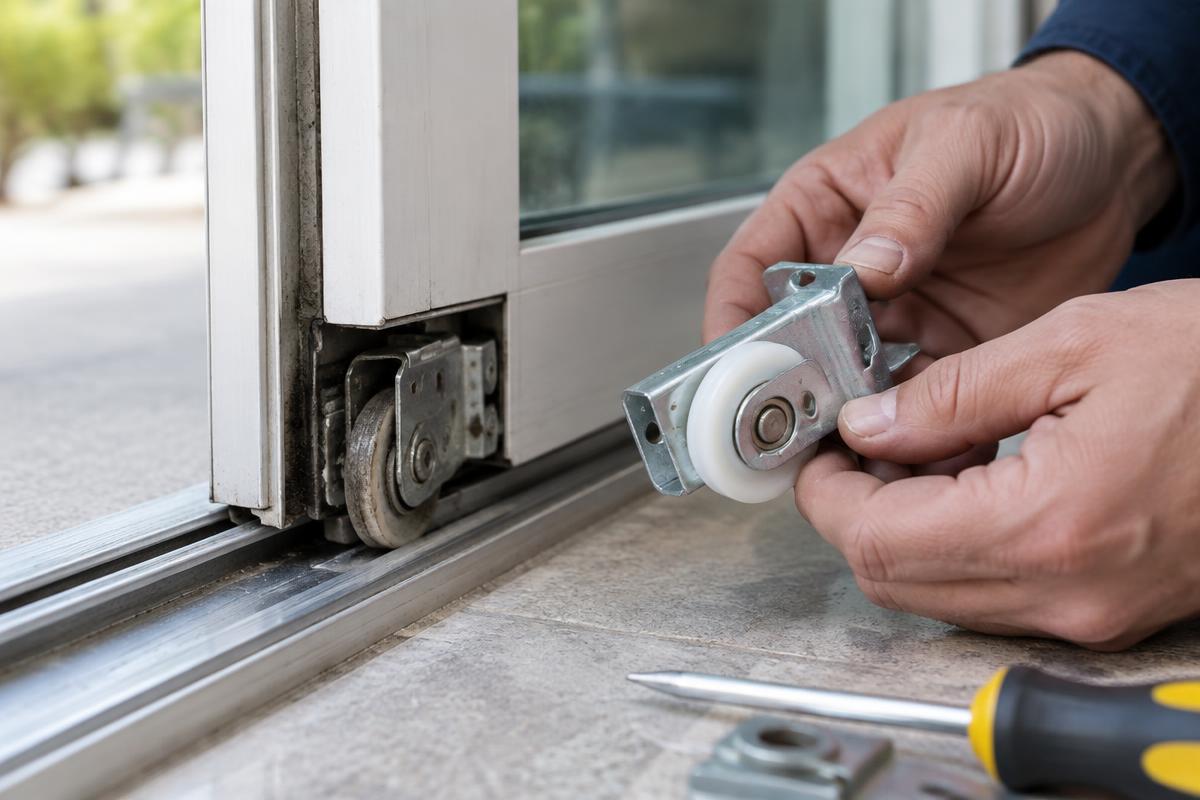
The appropriate work depends on the damage. A sound rail with a limited defect may be corrected, while a compatible section or cap may be suitable for some track designs. Roller condition matters because a seized or flat-spotted wheel can drag across and damage a newly smoothed rail. Alignment is checked so the panel sits correctly and its weight is carried as intended before full travel and latching are tested.
- Inspect the door movement, rail, frame, and drainage.
- Clean the channel and examine the exposed running surface.
- Check the rollers for wear, flat spots, and poor rotation.
- Repair suitable localized damage or fit a compatible track part.
- Reinstall and align the panel, then test travel and latching.
Repair or replacement considerations
Repair is generally considered when the track remains securely supported and the damage is limited. Debris, light surface wear, or an isolated defect does not automatically justify replacing the assembly. The aim is to restore a continuous, smooth path while retaining sound components. The door's construction and the availability of a compatible repair part also influence which approach is practical.
Replacement becomes more likely when corrosion is extensive, metal is cracked, deformation affects a large area, or the supporting frame can no longer hold the track securely. Severe wear along much of the rail may also make a localized repair unreliable. These signs do not mean the entire glass door must be replaced; the relevant track or frame component should be identified first. An inspection should also account for roller damage, which can reproduce similar symptoms even on a sound rail.
Maintenance tips to keep the track clear
Regular light cleaning is easier than removing compacted residue. Vacuum the accessible channel before grit becomes embedded, brush out corners gently, and wipe and dry the rail. Keep the threshold area free of accumulated leaves and sand, and check that drainage openings remain unobstructed. Avoid thick oil or greasy products on the bottom running surface because they can hold fresh dirt and create an abrasive paste.
Pay attention to small changes instead of waiting for the door to seize. New noise, a recurring rough spot, or extra effort after cleaning is a reason to arrange an inspection. Never use additional force to push a jumping or unstable panel through its travel. If the track stays rough after careful cleaning, or you can see damage, request an assessment through the contact form so the rail, rollers, and alignment can be considered together.
Related services and guides
Frequently asked questions
What are the signs a glass door track needs repair?
Common signs include grinding or scraping, sticking at a consistent point, visible debris or damage, rough movement after cleaning, and a panel that shudders or jumps. A door leaving its normal path should not be forced. Similar symptoms can come from rollers or alignment, so the complete door needs to be considered.
Can a dirty track be fixed with cleaning alone?
Yes, when loose or compacted debris is the only problem, careful vacuuming, brushing, wiping, and drying may restore smooth movement. If resistance remains, or cleaning reveals dents, grooves, cracks, or corrosion, further inspection is appropriate. Do not keep forcing a door that still grinds or jumps after cleaning.
What does glass door track repair usually include?
It usually starts with inspection of the panel, track, rollers, guides, frame, and drainage. The channel is cleaned, suitable localized rail damage is addressed, and rollers and alignment are checked. Where a compatible track section or cap is appropriate, it may be fitted before the panel is adjusted and tested through its full travel and latch.
When might a track need replacement instead of repair?
Replacement may be more appropriate when the rail is cracked, extensively corroded, severely deformed, or insecurely supported, or when wear extends along much of its surface. The door design and availability of compatible parts also matter. An inspection should determine whether only the track component is affected rather than assuming the whole door needs replacement.
Need help with your sliding door?
Request a quote through our contact form and describe what's happening with your track.