

Published
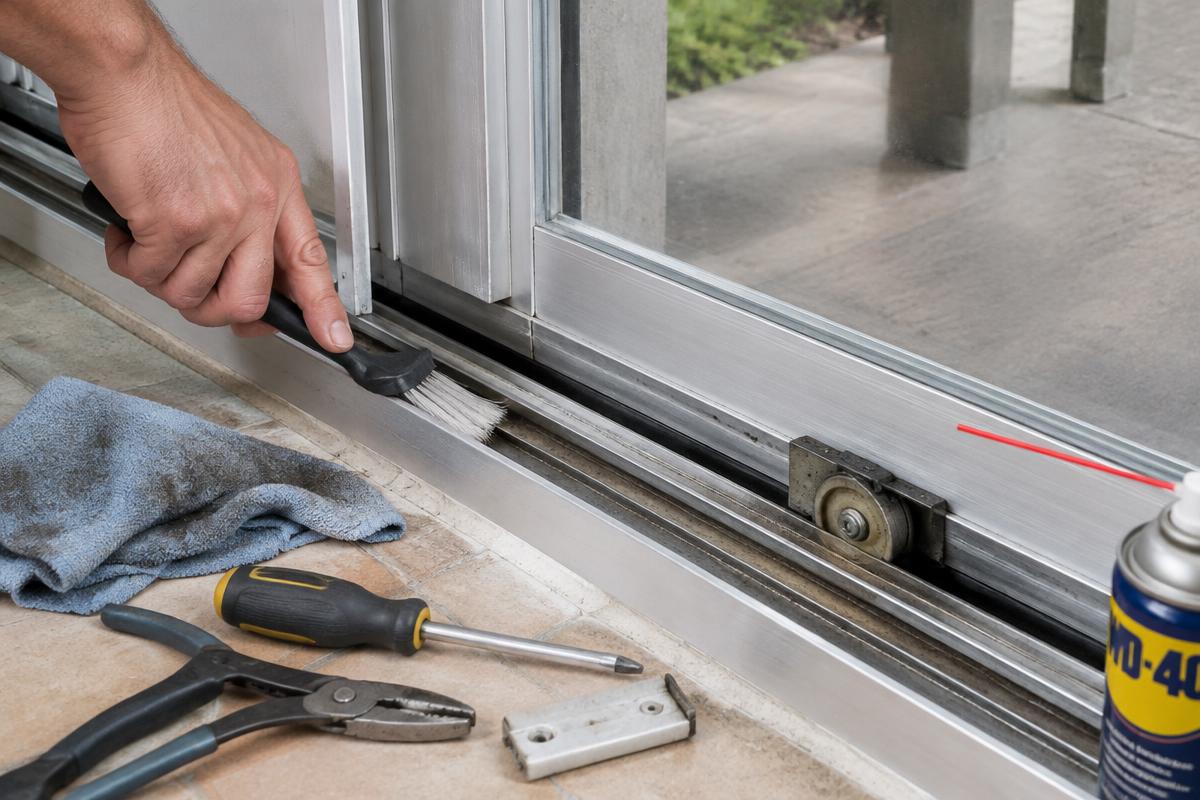
Door track restoration addresses the surface that guides a sliding glass door's rollers. When that surface becomes dirty, dented, or worn, a door that once glided can start dragging and grinding. Restoring the track may involve cleaning, correcting limited damage, or fitting compatible replacement parts, rather than replacing the entire door. The right approach depends on the track, frame, and rollers together. Understanding those parts helps homeowners distinguish a simple obstruction from damage that needs professional attention.
Signs a sliding door track needs attention
Notice where resistance happens. If the panel catches at the same point on every pass, inspect the accessible rail there for a dent, raised edge, or embedded debris. Dragging along most of its travel can also indicate worn rollers or a panel sitting too low. Grinding is a warning to stop forcing the door, not a reason to pull harder on its handle.
Visible grooves, flattened metal, and corrosion can interrupt the wheels' path. A door that jumps off the track needs prompt assessment because its support or guidance may be compromised. These symptoms do not prove the track is the only problem: roller failure, alignment, and damaged guides can create similar behavior. Observe the panel without lifting it or putting fingers beneath it.
How Florida dirt and debris build up in tracks
In Florida homes, open patio doors and foot traffic can bring sand, garden soil, and fine dust into the threshold. Pet hair and leaves collect around that grit, while moisture and old lubricant can turn it into a packed residue. Rollers repeatedly passing over debris may drag particles along the rail and contribute to abrasion.
Coastal exposure can add salt residue, but corrosion varies with the metal, finish, drainage, and local conditions. White powder or pitting on aluminum deserves a closer inspection; it is not automatically evidence that the whole frame must be replaced. Clear accessible drainage openings gently and avoid washing dirt deeper into the frame. A clean channel makes actual track damage easier to see.
What professional track restoration involves
A technician first checks the door's movement, frame condition, and roller support. Deep cleaning removes loose grit and hardened residue so the full running surface can be assessed. Access to concealed areas may require safely removing the heavy glass panel with suitable equipment and help. Cleaning alone may resolve debris-related resistance, but it cannot reverse worn metal or a seized bearing.
Minor bends may be straightened when the rail remains structurally sound. Local damage may require repairing or replacing a compatible track section, while some worn rails suit a correctly fitted track cap. Not every door allows separate track sections to be replaced. The repair must preserve wheel clearance, drainage, and secure attachment rather than simply covering damage with an arbitrary strip of metal.
Why rollers, lubrication, and alignment matter
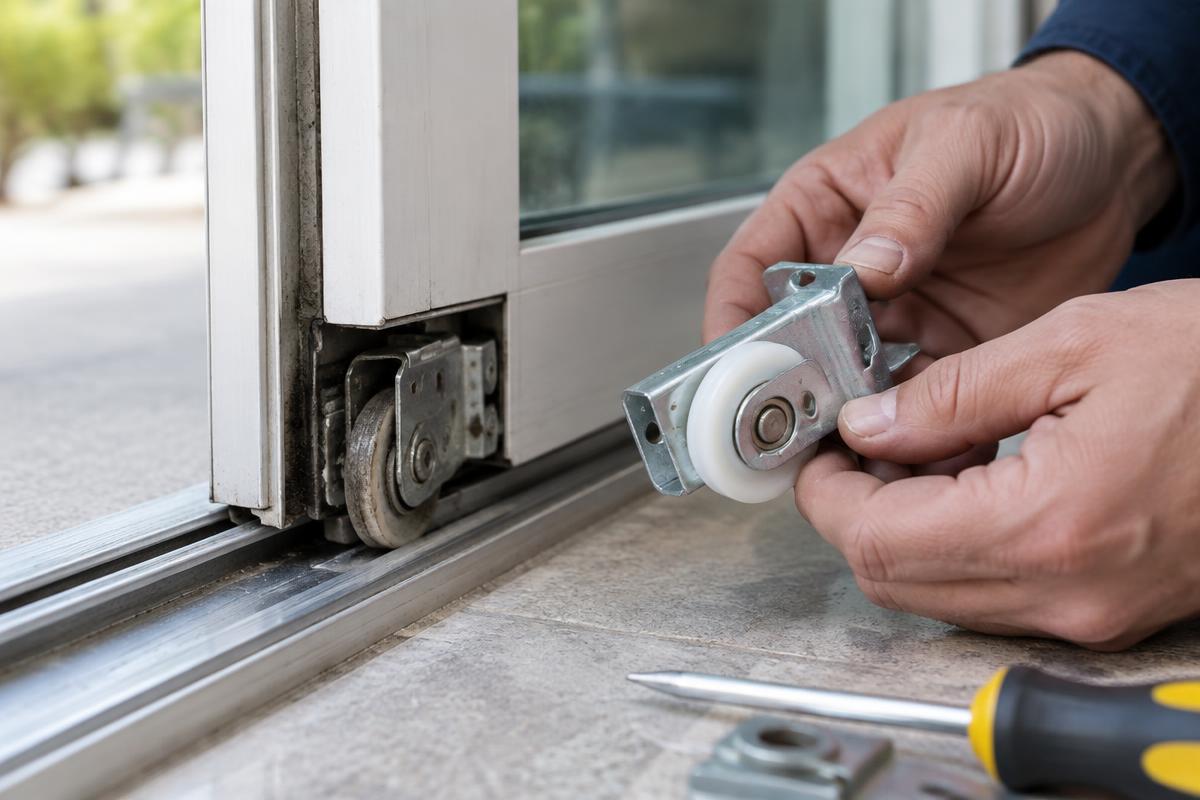
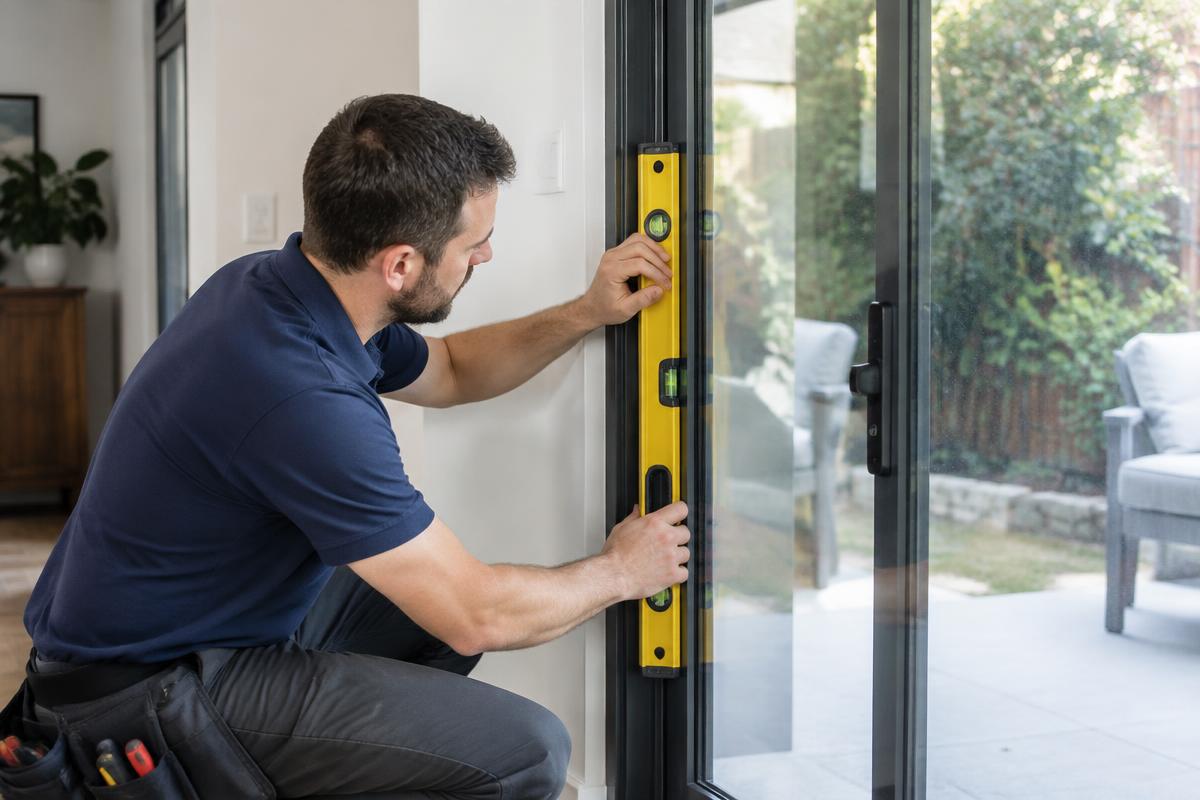
The restored rail needs healthy wheels riding on it. A flat-spotted or seized roller can damage a repaired surface, so roller assemblies should be inspected and worn parts replaced with compatible hardware. After reinstallation, adjustment brings the panel level and restores clearance from the frame. The door should move smoothly and meet the latch without being lifted or pushed sideways.
Lubrication is specific to the door's hardware and manufacturer instructions. Some assemblies permit a suitable lubricant at designated points; sealed bearings may not. The bottom rail is generally best kept clean and dry rather than coated in oil that attracts grit. A professional should test movement along the entire track and check the closing gap, latch, and guides before considering the work complete.
Safe cleaning and obstruction checks at home
Open the door only as far as it moves comfortably. Vacuum the exposed channel using a crevice attachment, loosen accessible debris with a soft brush, and wipe with a lightly damp cloth. Use a mild cleaner only if permitted for the finish, remove residue, and let the track dry. Keep water away from interior flooring and avoid sharp tools, abrasive pads, or corrosive chemicals.
Look for stones, loose screws, and weatherstripping caught in the panel's path. Do not remove hardware whose purpose is unclear. Test the door gently after cleaning and note whether the rough spot remains. Stop if it jumps, tilts, or grinds severely. Removing a glass panel, hammering a rail, grinding metal, and improvising a track cap are not routine homeowner cleaning tasks.
When repair is suitable and when to call a professional
Restoration is worth considering when damage is limited and the surrounding frame can support a sound repair. Extensive corrosion, cracking, major deformation, or an unstable frame may make replacement more appropriate. Compatibility and the ability to maintain drainage also matter. An inspection should explain what is damaged, which options fit the door, and why a proposed repair addresses the underlying cause.
Arrange professional help when cleaning does not improve movement, the panel repeatedly leaves the rail, or the latch no longer aligns. Avoid operating an unstable panel and keep people away from cracked glass. For less urgent problems, note where the door catches and whether the noise changes after cleaning; those details help guide an assessment. Request a quote through Eagle Sliding Door Repair's contact form or use the Call Now button below.
Related services and guides
Frequently asked questions
What is sliding door track restoration?
It is work to restore a usable running surface for the rollers. Depending on condition, it can include deep cleaning, correcting minor bends, repairing damaged sections, or fitting a compatible track cap, alongside roller inspection and alignment.
Why does my sliding door keep jumping off its track?
Debris, a damaged rail, worn rollers, incorrect adjustment, or damaged guides can let the panel leave its normal path. Stop forcing or operating an unstable door and have its support and guidance checked professionally.
Can I clean or fix a sliding door track myself?
You can vacuum accessible debris, wipe the track, and check for obstructions without lifting the panel. Structural repairs, panel removal, roller replacement, and track fitting are better left to someone equipped to handle heavy glass safely.
When should a sliding door track be repaired instead of replaced?
Repair may suit localized wear or minor deformation when the frame is sound and compatible repair parts are available. Extensive corrosion, cracks, or major frame damage may favor replacement. The choice requires inspection of the complete door system.
Need help with your sliding door?
Request a quote and describe what's happening.