

Published
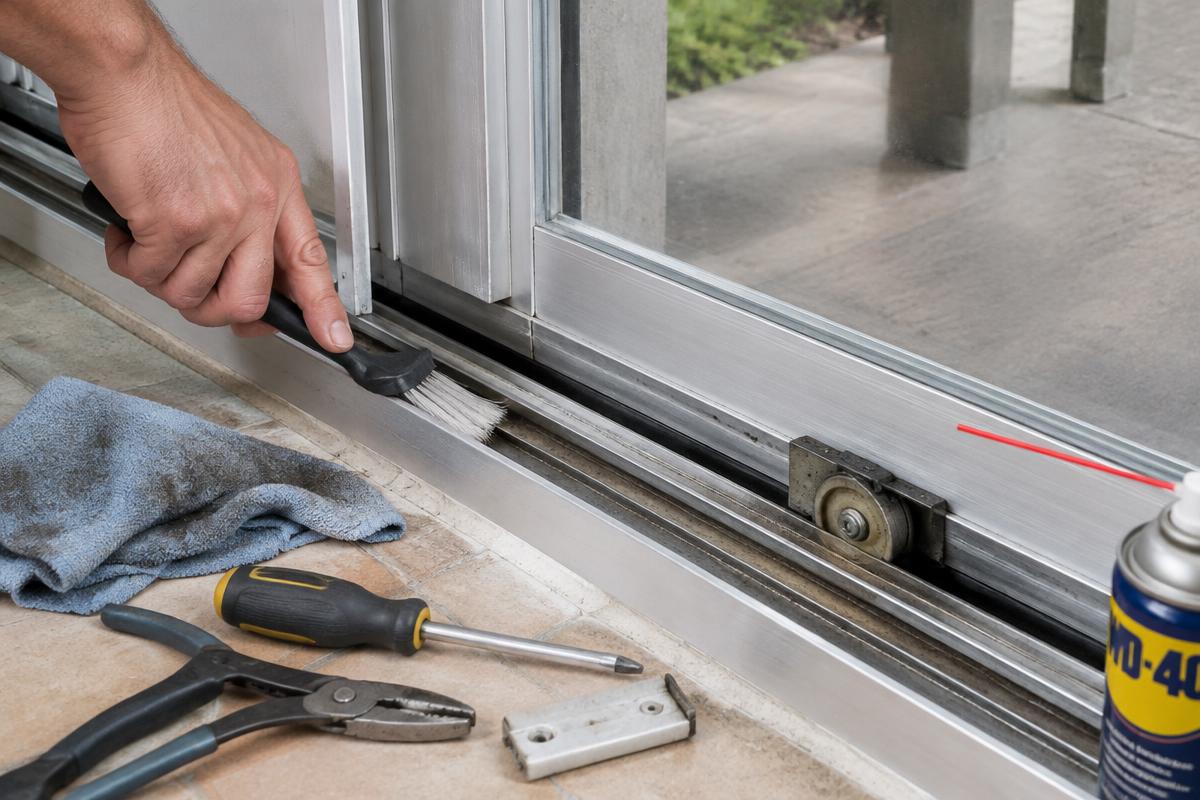
Sliding door track repair deals with the rail the rollers ride on. When that rail is dented, grooved, corroded, or packed with debris, the panel stops gliding and starts dragging, grinding, or jumping out of line. That differs from full track restoration, which returns a worn running surface to usable condition, and from replacing the whole door. This guide covers the signs the track needs attention, how the repair works, and what the service includes.
Signs you need sliding door track repair
The clearest signal is a panel that catches at the same spot on every pass. Open the door slowly and watch the rail there: a dent, a raised edge, a groove worn into the metal, or a flat spot where the wheel has pounded the same few inches all explain it. Grinding that arrives in the same place each time usually means something hard is contacting the rail.
A door that lifts, jumps, or leaves the rail, and a latch that no longer lines up with the strike plate, are stronger warnings: both suggest the panel is no longer tracking where it should. The same behavior can come from worn or seized rollers, a panel sitting too low, or a shifted frame. Noting where it catches and what it sounds like helps an inspection check the right part instead of replacing hardware that is still fine.
What damages a sliding door track
Most track damage begins as dirt. Sand and fine grit carried in on feet, pet paws, and garden soil settle into the channel, and leaves, hair, and dust collect around them. Moisture and old lubricant bind that mixture into a packed residue the rollers drag along the rail. Over time it polishes grooves into the metal and forces the wheels to ride higher than designed.
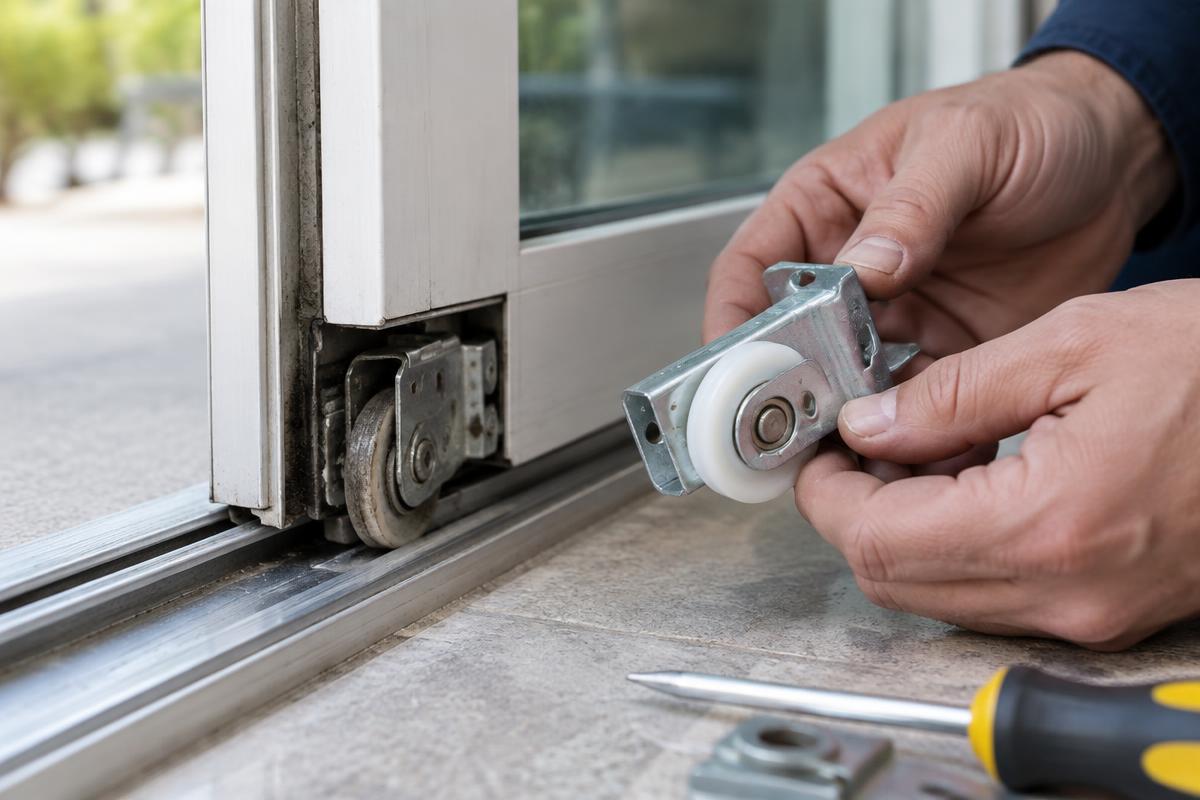
Water adds another layer. When drainage openings clog, water sits in the channel, and on older or scratched finishes that moisture can encourage corrosion, pitting, and white powder on aluminum. Worn or seized rollers do the rest: a wheel whose bearing has stopped turning does not roll, it drags, and a flat-spotted wheel strikes the rail at the same point every revolution. Repairing the rail without dealing with those rollers tends to undo the repair.
The sliding door track repair process, step by step
A repair visit usually starts with the door in place. The technician opens and closes the panel to see where it resists, then examines the rail, frame, and rollers before deciding what the door needs. Depending on the door, the panel may be lifted out with suitable equipment and a second pair of hands, which is not a routine homeowner task with heavy glass.
With the channel accessible, the work follows a rough order: clean, assess, correct, then reassemble and test. Cleaning is not a courtesy; it is what lets the technician judge whether the rail is sound. The final adjustments matter as much as the metalwork, since a repaired rail that leaves the panel rubbing the frame is not finished.
- Inspect the door's movement, rail, frame, and rollers.
- Safely remove the panel where access requires it.
- Deep clean the channel and clear drainage openings.
- Straighten minor bends where the rail is sound.
- Repair localized damage or fit a compatible track section or cap.
- Inspect rollers and replace worn ones with compatible hardware.
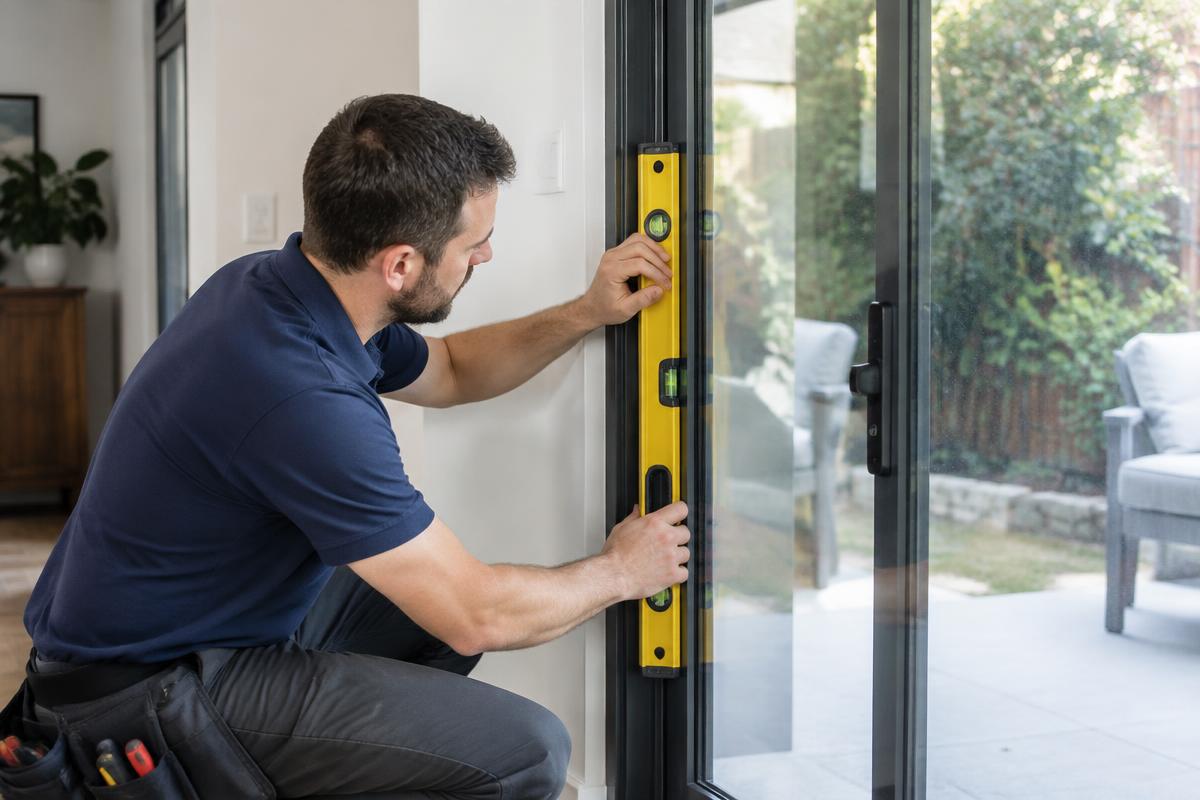
- Reinstall the panel and adjust it level with correct clearance.
- Test travel along the full track and check the latch.
What a sliding door track repair service includes
A track repair service is a package. It starts with inspection and diagnosis of the whole door: how it moves, how the frame sits, what the rollers are doing. Deep cleaning of the channel follows so the running surface can be judged honestly. Rail work comes next, whether straightening, repairing a damaged area, or fitting a compatible track section or cap. Roller inspection, alignment and height adjustment, and final testing of travel and latch round out the visit.
What it does not automatically include is a new door or frame. Those enter the conversation only when inspection shows the frame or rail is cracked, corroded through, or deformed beyond a sound repair. If replacement is recommended, the reason should be specific and visible: which part is damaged, why a repair will not hold, and what the replacement restores.
Track repair, restoration or replacement: how they differ
The three terms describe different amounts of work. Repair fixes localized damage in the rail: a dent, a groove, a damaged end, or a section that can be swapped for a compatible part. Restoration covers more of the surface, returning a worn running surface to usable condition, often by deep cleaning, correcting minor deformation, and fitting a track cap over a rail that is worn but still sound.
Replacement is the option when damage is no longer local. A rail or frame that is extensively corroded, cracked, or badly deformed usually cannot be brought back to a stable, level running surface. The distinction matters because one door can need restoration in one section and simple cleaning in another, and because the panel can be serviceable while its rail is not. Which applies is decided by inspecting the complete door system.
Keeping a repaired track sliding smoothly
After a repair, the channel is the part worth maintaining. Vacuum it with a crevice attachment every few weeks, wipe it with a lightly damp cloth, and dry it, keeping drainage openings clear so water leaves the frame. The bottom rail is generally best kept clean and dry rather than coated in oil, which grabs the grit you are trying to keep out. Skip abrasive pads and sharp tools.
Two habits protect the work further. Stop forcing a door that grinds or catches, because pulling harder turns a small dent into a bent rail and a tired roller into a seized one. And have the rollers checked early: they carry the panel's weight on that rail, and a wheel that has begun to drag will damage a repaired surface long before the door feels difficult.
Related services and guides
Frequently asked questions
What does sliding door track repair include?
Inspection of the door's movement, frame and rollers, deep cleaning of the channel, repairing localized rail damage or fitting a compatible track section or cap, roller inspection, and final adjustment and testing of the door's travel and latch.
How do I know if my track needs repair or replacement?
Localized dents, grooves or minor corrosion on a sound frame can often be repaired. Extensive corrosion, cracks or major frame deformation may make replacement more appropriate, so an inspection of the complete door system is what decides.
Can I repair a sliding door track myself?
You can vacuum and wipe the track and check for obstructions without lifting the panel. Straightening rails, fitting track parts and removing a heavy glass panel are better left to a professional with the right equipment.
Will track repair help if my rollers are worn too?
Yes, but the rollers should be inspected at the same time. A flat-spotted or seized roller can damage a repaired rail, so worn rollers are replaced with compatible hardware as part of a complete repair.
Need help with your sliding door?
Request a quote and describe what's happening.