

Published
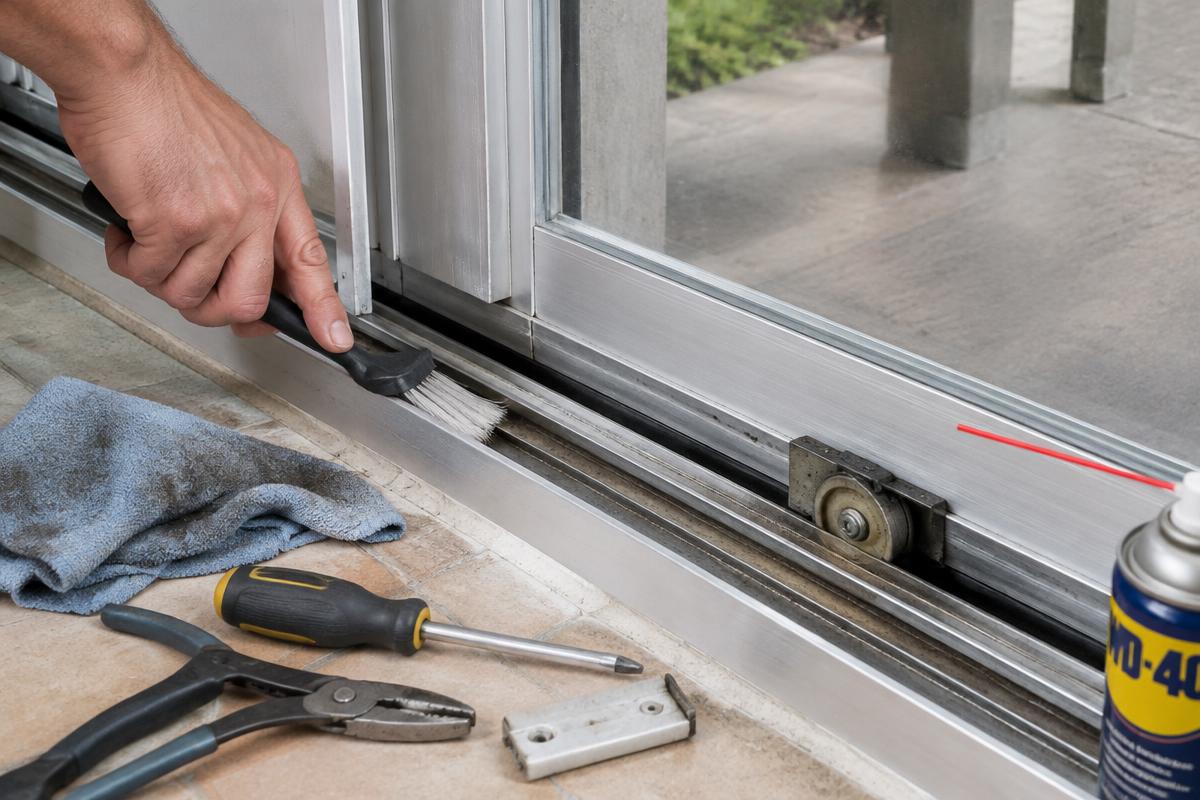
Sliding door track replacement becomes worth considering when the rail that guides the rollers is too damaged to provide a stable running surface. Cleaning can remove grit, and a localized repair can correct limited damage, but neither restores metal that is cracked, severely corroded, or badly deformed. Knowing the difference helps homeowners avoid unnecessary damage or replacement. This guide explains the warning signs, what replacement involves, and why the rollers and alignment must be assessed at the same time.
Signs a sliding door track may need replacement
A track often gives warning before replacement is necessary. The door may catch at the same place, grind along much of its travel, or feel rough even after the channel has been cleaned. Look for deep grooves, a rail flattened in several areas, cracks, extensive pitting, or sections that have lifted away from their support. Damage spread along the rail is generally more significant than one small dent.
Other symptoms concern the door's support and guidance. A panel that repeatedly jumps, sits unevenly, or leaves its normal path needs prompt attention. These signs can also come from failed rollers, loose guides, incorrect adjustment, or frame movement, so they do not prove that the track alone is at fault. Stop forcing the panel and have the complete door inspected if it seems unstable.
- Cracked, badly bent, or extensively corroded rail sections
- Deep wear or deformation along much of the running surface
- A track that cannot remain securely supported by the frame
- Repeated catching or jumping after cleaning and basic checks
How track replacement differs from track repair
Track repair addresses a sound rail with limited problems. Depending on the door, that may mean removing debris, correcting a small bend, repairing a damaged area, or fitting a compatible section or cap over a suitable running surface. The aim is to retain the serviceable parts of the existing assembly while giving the rollers an even path. Repair is not appropriate when the underlying support is cracked, distorted, or unable to hold the rail securely.
Replacement removes the unsuitable track component and installs a compatible replacement rather than trying to preserve badly damaged metal. It does not automatically mean replacing the entire glass door. What can be replaced separately depends on the door's construction: some tracks are distinct serviceable parts, while others are integrated with the threshold or frame. An inspection should identify the exact part involved and explain why repair is no longer a sound option.
What happens during sliding door track replacement
The process starts with observing the door's movement and checking the rail, frame, rollers, guides, and drainage. The technician should determine whether the opening is sound enough to support a replacement and whether the necessary part is available for that door. Heavy glass panels may need to be removed for access using suitable equipment and safe handling; this is not a routine homeowner lifting task.
Once the panel and any necessary hardware are safely out of the way, the channel is cleaned and the damaged track is removed according to its design. The supporting surfaces are examined before the compatible replacement is fitted. Secure attachment, correct position, preserved drainage, and proper wheel clearance all matter. A new rail cannot perform properly if it sits on an unstable base or blocks the frame's drainage path.
- Inspect the complete door and confirm that replacement is appropriate.
- Remove the glass panel safely when access requires it.
- Remove the damaged track and prepare the supporting surface.
- Fit the compatible replacement without obstructing drainage.
- Inspect the rollers and reinstall the panel.
- Adjust alignment, then test full travel, guidance, and latching.
Why rollers and alignment affect the decision
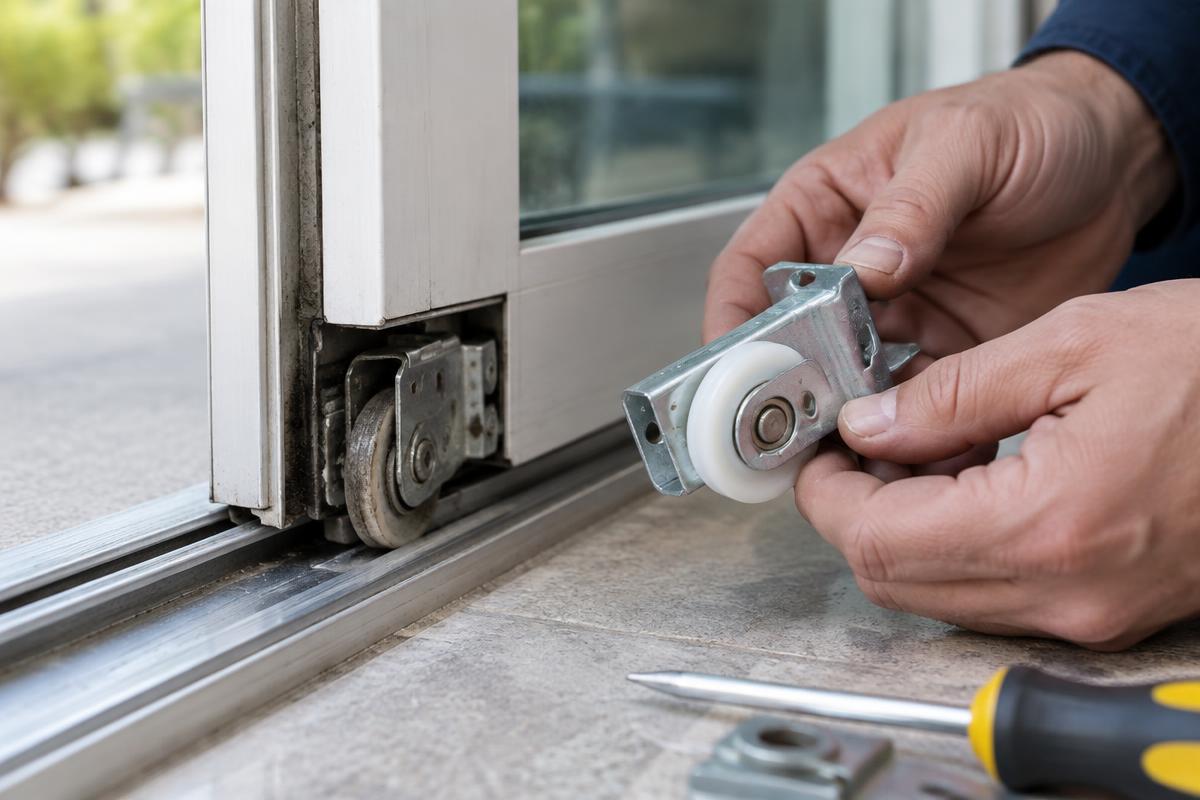
Rollers and tracks wear together. A seized roller can drag across the rail and carve a groove, while a damaged rail can flatten or chip otherwise serviceable wheels. Installing a replacement track without addressing failed rollers can expose the new surface to the same damaging motion. The roller assemblies therefore need inspection, and any replacements must suit the panel's design and weight.
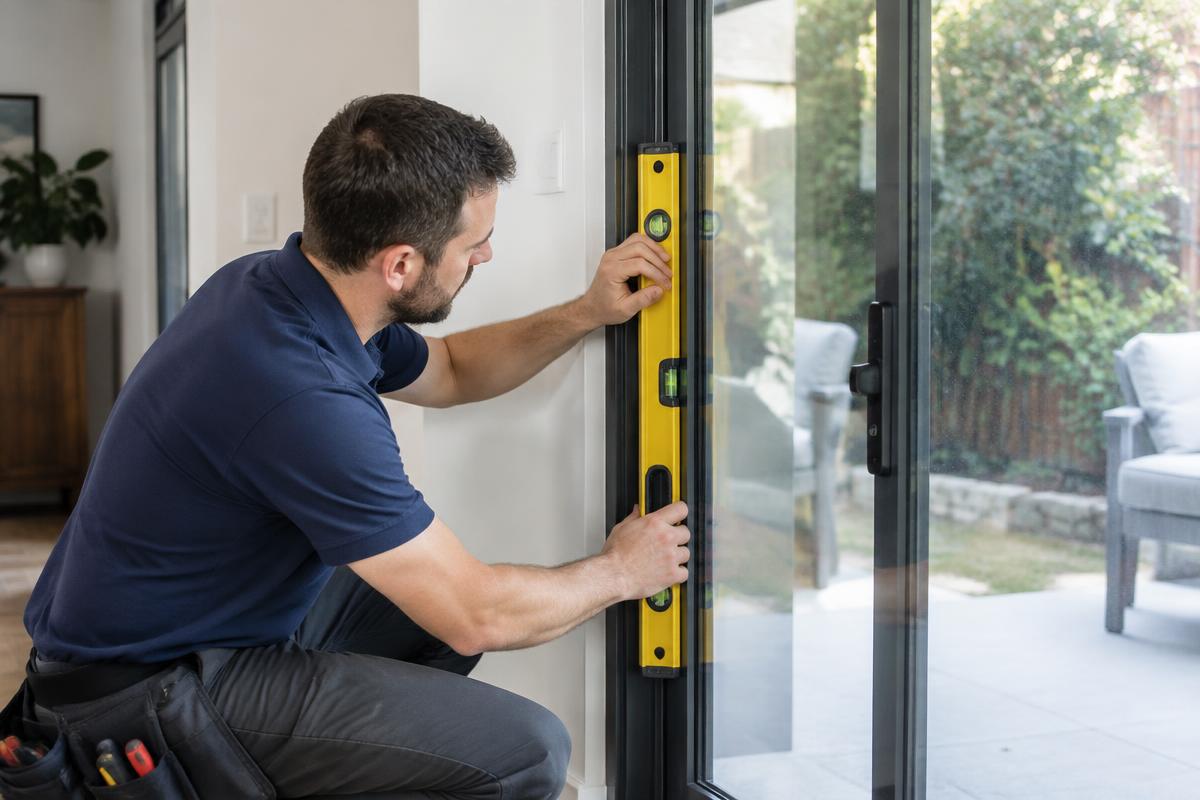
Alignment is the other half of a successful result. Roller height and panel position determine whether the door travels level, clears the frame, and meets its guides correctly. After reinstallation, the panel should be tested through its full range rather than only near one end. The closing gap and latch are also checked because a panel that slides well but does not close correctly still needs adjustment.
Safe checks homeowners can do first
Begin without removing the panel or loosening unfamiliar hardware. Move the door only as far as it travels comfortably. Vacuum the exposed channel with a crevice attachment, loosen accessible debris with a soft brush, and wipe the rail with a lightly damp cloth. Dry the area and gently clear accessible drainage openings without pushing dirt farther into the frame. Then test the door gently and note whether resistance remains.
Look for stones, loose screws, lifted weatherstripping, visible cracks, corrosion, and changes in the rail's shape. Watch whether the panel appears level and listen for where grinding begins. Do not put fingers beneath the panel, hammer the rail, grind metal, or improvise a cover with unmatched material. Avoid oily sprays on the bottom track because they can trap grit. Stop if the panel tilts, jumps, or feels insecure.
When to get professional help
Arrange an assessment when cleaning does not improve movement, damage extends beyond a small area, or the panel repeatedly catches or leaves its path. Prompt help is especially important if the door seems unstable, the frame is cracked, or the glass is damaged. Keep people away from an unstable panel and avoid operating it until its support has been checked.
A useful assessment should distinguish dirt, roller wear, alignment problems, localized track damage, and conditions that genuinely call for replacement. Ask which component is damaged, whether a compatible part is available, and what final adjustments are included. You can describe the symptoms and request a quote through Eagle Sliding Door Repair's contact form without attempting to diagnose the door yourself.
Related services and guides
Frequently asked questions
How can I tell whether my sliding door track needs repair or replacement?
Localized damage on a securely supported rail may be repairable, while extensive corrosion, cracks, major deformation, or a failed supporting surface may favor replacement. Similar symptoms can also come from rollers or alignment, so the complete door needs inspection.
Does the glass door have to come off for track replacement?
Often the panel must be removed to reach the track safely and fit the replacement correctly, although access depends on the door's design. Heavy glass removal requires suitable handling and equipment and is not a routine homeowner task.
Should rollers be replaced at the same time as the track?
Not automatically, but they should always be inspected. Worn, flat-spotted, or seized rollers can damage a replacement track, so unserviceable rollers should be replaced with compatible hardware before final adjustment.
What happens after the replacement track is installed?
The panel is reinstalled, its roller height and alignment are adjusted, and the door is tested through its full travel. Guides, clearances, drainage, and latching are checked so the new track works as part of the complete door system.
Need help with your sliding door?
Request a quote through our contact form and describe what's happening with your track.